Lebanese Journalists Trained to Cover Corruption Issues

Media are NGOs’ partners in the fight against corruption, experts told Lebanese journalists at a workshop in Beirut.

Media have played a key role in uncovering Arab leaders’ corruption, according to Dr. Azmi Shuaibi, the Arab Anti-Corruption and Integrity Network’s Non-Governmental Group coordinator.

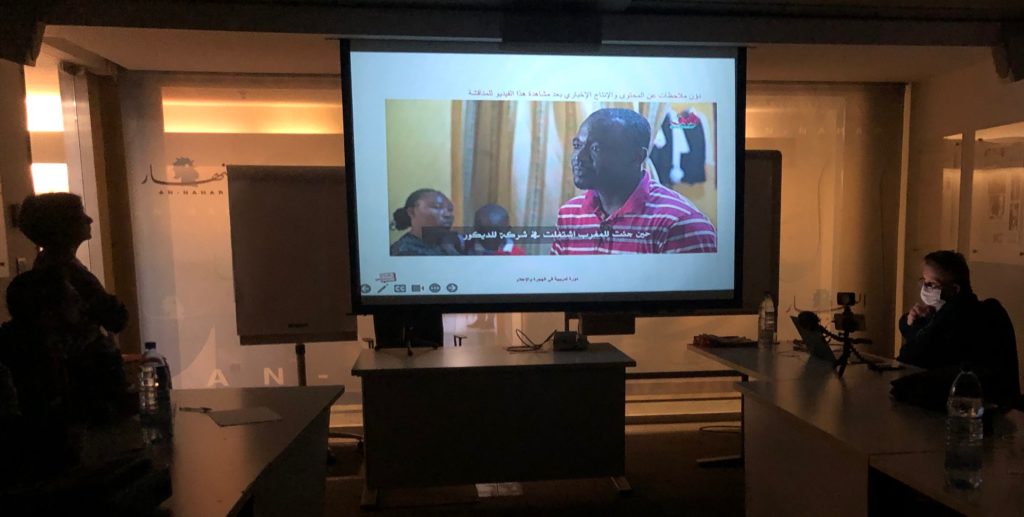
Dr. Azmi Shuaibi explains partnership between NGOs and media

Dr. Azmi Shuaibi explains partnership between NGOs and media

He addressed 10 journalists from print, broadcast and online media who attended the training as part of a conference organized by the UN Development Program (UNDP), ACIAC and the Lebanese Justice Ministry.

The April workshop also featured academic Khalil Gebara who asked rhetorically if there was a political will in Lebanon to fight corruption.

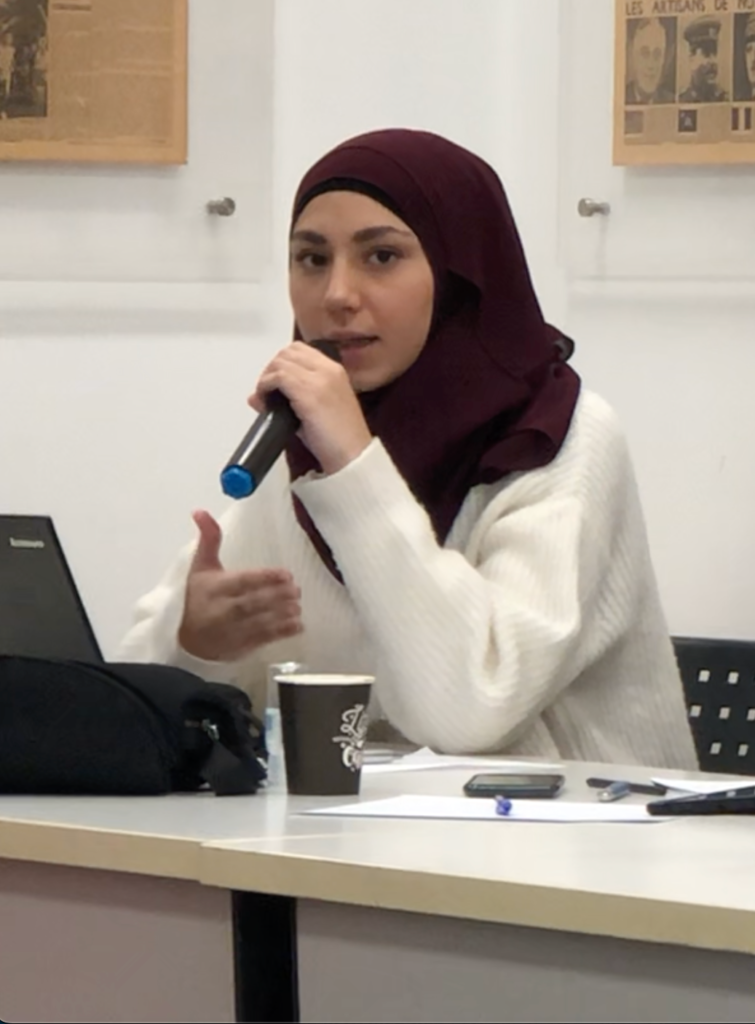
Journalists at anti-corruption workshop

Journalists at anti-corruption workshop

“Why aren’t corruption issues on the list of government priorities?” he said.

Dr. Khalil Gebara

Dr. Khalil Gebara

Lead trainer and Media Unlimited director Magda Abu-Fadil walked the journalists through the definitions of corruption and how media can play an increasingly important role as watchdogs in the post-Arab Spring environment.

She also briefed them on international standards of investigative journalism and their application to corruption in the Arab world.

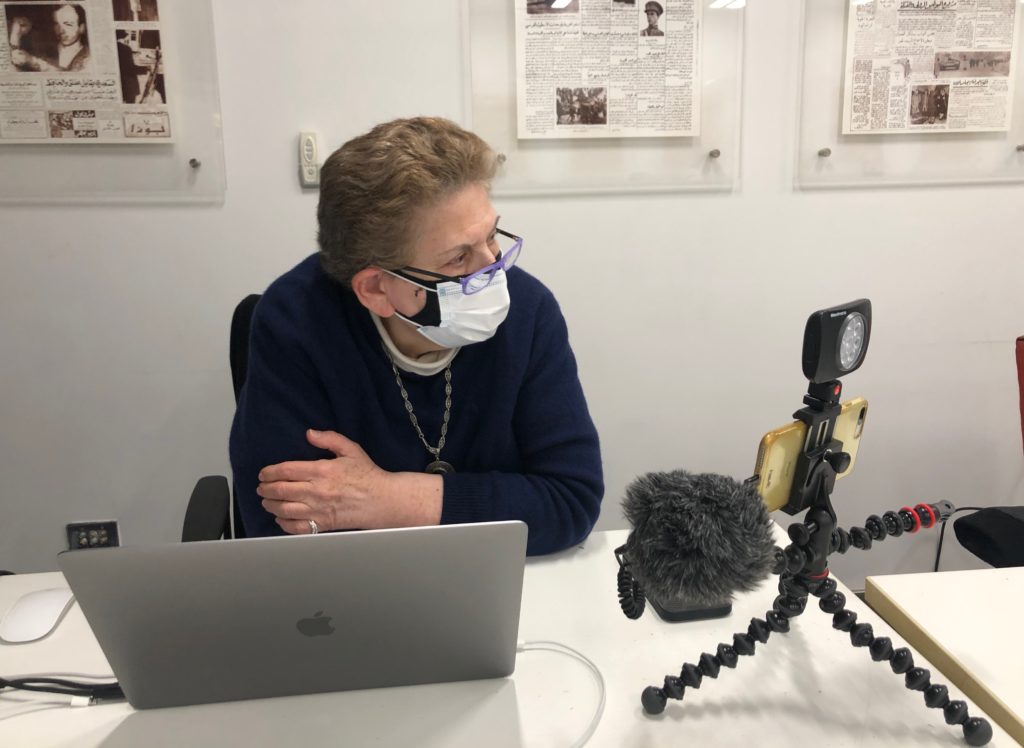
Magda Abu-Fadil shows links between anti-corruption coverage and investigative journalism

Magda Abu-Fadil shows links between anti-corruption coverage and investigative journalism

Another key component is media ethics and its importance in reporting on corruption, she said.

Abu-Fadil also focused on the vital role played by social media and how best to utilize them.

Participants provided a list of recommendations, which UNDP’s Regional Communications Specialist Rut Gomez Sobrino hopes to translate into an action plan.

Lebanese journalists, Rut Gomez Sobrino and Abu-Fadil at anti-corruption workshop

Lebanese journalists, Rut Gomez Sobrino and Abu-Fadil at anti-corruption workshop


Abu-Fadil Article As Part of EWIC Public Outreach Project

An article by Media Unlimited director Abu-Fadil entitled “Arts: Women Journalists and Women’s Press: Central Arab States” [Arts Women Journalists and womens press central arab states Abu Fadil] was selected to be used as part of the Encyclopedia of Women and Islamic Cultures’ Public Outreach Project.

Arts Women Journalists and women's press central Arab states Abu Fadil-1

The outreach project covers a range of community organizations, including K-12 teachers and the media, with a goal of disseminating knowledge about women and Islamic cultures.

The project is funded by a Henry Luce Foundation grant, and the public outreach is organized by EWIC’s General Editor, Suad Joseph as well as Associate Editors, Bahar Davary, Marilyn Booth, Sarah Gualtieri and Elora Shehabuddin.

As part of the project, the article published in 2007 will be made available on the Encyclopedia of Women and Islamic Cultures and General Editor’s website.

It will also be published as a brochure and in brief format to be handed out to local agencies, NGOs, schools, religious institutions, and interfaith organizations.

Dr. Suad Joseph is Distinguished Professor of Anthropology and Women and Gender Studies at the University of California, Davis.

Accuracy key to good journalism: Abu-Fadil

Getting it right topped the list of tips Media Unlimited director Magda Abu-Fadil offered journalists at Al Arabiya’s English website during an informal chat in Dubai.

Magda Abu-Fadil addresses Al Arabiya’s English website team

Magda Abu-Fadil addresses Al Arabiya’s English website team

Abu-Fadil said elementary rules like spelling people’s names correctly and ensuring their titles were precise should not be overlooked since they were the corner stones of good reporting.

She also cautioned participants, several of whom she trained in October 2012, not to rush and publish information before verifying it from multiple sources, noting that rumors and other questionable news and visuals filled the Internet, leading to many a journalist’s downfall.

Abu-Fadil recounted some of her adventures as a foreign correspondent and editor and how she had transitioned from being a traditional journalist to a blogger and media trainer.

Abu-Fadil with Al Arabiya English website editor in chief Faisal Abbas

Abu-Fadil with Al Arabiya English website editor in chief Faisal Abbas

The event dubbed “Accuracy: How it could make us, or break us,” was part of an Al Arabiya English website General Assembly in March 2013.

That’s Entertainment! Training Journalists Covering the Industry

How can one train journalists in coverage of the entertainment industry?

It’s not just television, radio, the movies and awards shows, but also the performing arts, the lucrative gaming business, health matters, and sometimes sports issues that define entertainment.

Producing entertainment content at MBC's online Dubai newsroom

Producing entertainment content at MBC’s online Dubai newsroom

Add “infotainment” and “edutainment,” and one has a vast world of news, views, statistics, and countless forms of visual representation to produce and deliver to any number of recipients across multiple mobile platforms.

So juggling news gathering, curation, production and packaging into the right online channels and interacting with one’s audiences via social media to keep the dynamic conversation going requires special talents, skills and a wide base of general knowledge.

Enter Media Unlimited’s Magda Abu-Fadil who worked with a team of very capable and professional entertainment journalists at the MBC Group’s online newsroom in Dubai to sharpen their skills and tweak their copy.

MBC-Al Arabiya building in Dubai

MBC-Al Arabiya building in Dubai

The March 2013 workshop focused on identifying entertainment journalism, tools of the trade, story structure, the art of writing entertainment news, breaking news and features.

The brief course dealt with widening the information base, working with archives, using background data and integrating strong visual elements in all stories.

Not to be overlooked was a dose of media ethics, notably in a field rife with rumors and innuendo.

Magda Abu-Fadil with new MBC friends

Magda Abu-Fadil with new MBC friends

The team also learned about interviewing techniques when dealing with celebrities, speeches, news conferences and the use of social media to collect and promote entertainment news.

MU Trains Lebanese Journos to Cover Women’s Economic Empowerment

A series of countrywide workshops introduced Lebanese journalists to women’s economic empowerment in rural areas in a bid to improve media coverage of the often-neglected topic.

Magda Abu-Fadil with Tripoli journalists

Magda Abu-Fadil with Tripoli journalists

Print, online and broadcast journalists based in various regions of Lebanon learned how to define women’s economic empowerment, how to enter the terminology in their media lexicon and how to cover topics related to promoting gender equality.

Abu-Fadil with Bekaa-based journalists

Abu-Fadil with Bekaa-based journalists

MU director Magda Abu-Fadil conducted a series of mini-courses in the Bekaa Valley city of Zahle, the northern port city of Tripoli and the southern city of Tyre where reporters, correspondents, cameramen and photographers became better acquainted with agriculture-based cooperatives that help women become financially independent.

The sessions included knowledge about existing impediments to empowerment.

Abu-Fadil also discussed how advocacy through traditional and social media can enhance women’s economic empowerment, and reviewed case studies of successful initiatives.

The three two-day workshops in February and March organized by the Collective for Research and Training on Development – Action (CRTDA) brought together reporters and civil society representatives from various towns and cities in Lebanon.

They followed an initial course aimed at journalists in the Lebanese capital Beirut.

Abu-Fadil and CRTDA’s Hayat Mershad with Beirut journalists

Abu-Fadil and CRTDA’s Hayat Mershad with Beirut journalists

A session focused on women in the Lebanese economy, how gender equality translates into smart economics, and, how the CRTDA has helped rural women set up cooperatives and their economic impact.

Trainees in Tyre

Trainees in Tyre

Trainees were given examples of cooperatives in the country’s Bekaa, South and Akkar regions aimed at building women’s productive and leadership skills, facilitating their access to local and international markets and supporting participatory governance and leadership.

A session by journalist Saada Allaw featured results of a media audit on coverage of women’s economic empowerment and gender equality issues.

Saada Allaw shares media study results with Tyre journalists

Saada Allaw shares media study results with Tyre journalists

Participants were then tasked with writing a piece for publication in their respective media, which will be reviewed and edited on a third training day weeks after the initial workshop.

The best coverage from workshops across the country will be awarded and will be published on CRTDA’s website.


Abu-Fadil on “Hewar Al Arab”: Twitter is key

Media Unlimited director Magda Abu-Fadil urged critics to reconsider their reluctance to use Twitter and better engage audiences through this social medium, given its growing importance in the Arab world.

She argued in favor of young tweeps and journalists, despite misuses of the platform, adding that Twitter had become a source of news and information that should not be ignored.

Magda Abu-Fadil on "Hewar Al Arab"

Abu-Fadil noted Arab journalists’ increased use of Twitter in the last couple of years but said they were still hesitant to capitalize on it as a news resource.

She said international news organizations had initiated codes of conduct for social media uses in addition to their traditional media guidelines for good journalistic practice.

Her views were aired on Al Arabiya satellite channel’s show “Hewar Al Arab” in an episode dedicated to “Twitter Communities.”

The program, hosted by Muntaha Al Ramahi, grouped tweeps Abdallah Shaalan and Moulouk Al Sheikh as well as academic Sadek Al Hamami.

Anba Moscow/Ria Novosti Journalists Upgrade Agency Online Skills

Seven journalists at Anba Moscow’s Dubai bureau underwent intensive training to upgrade their skills for the website maintained in Arabic by the Russian news agency Ria Novosti.

The journalists, who come from diverse backgrounds, attended a five-day workshop in October 2012 conducted by Media Unlimited director Magda Abu-Fadil on the needs of an international news agency, evolution of the media, and story structure in an online environment.

Anba Moscow trainees upgrade news agency online skills

Also on the agenda was the importance of solid headlines and leads, sources, types of wire stories and integration of social media into the mix for better audience engagement.

Magda Abu-Fadil with Anba Moscow team in Dubai

Abu-Fadil reminded the journalists of the need to maintain high ethical standards in their coverage.

They were provided tips on crises, sudden events, fieldwork, means of communication, safety measures and coordination between correspondents and their newsrooms.

Not to be overlooked, the Anba Moscow team was encouraged to make good use of infographics, photos, videos and audio clips, and develop interest in multimedia.

Media Unlimited Trains Gulf Journalists on Crises/Conflicts Coverage

Crises and conflicts – a topic all journalists should learn to cover since they inevitably encounter them in their work at some point.

Media Unlimited conducted a five-day workshop grouping reporters and editors from Kuwait and Oman on how to write about prickly issues such as sectarian strife; economic, political and social crises; and, unexpected events.

Participants from the Kuwait News Agency (KUNA) and Oman News Agency (ONA) learned from case studies, viewed videos of unfolding crises, and wrote news and features on related topics.

KUNA business reporter Suleiman Rida writes on Kuwaiti finance minister’s resignation

They also acquired skills on the importance of integrating social media in their stories and using them as sources of information.

KUNA journalists watch video on covering demonstrations

Other topics included the need for online research, reliance on archives, establishing an extensive network of good sources and learning how to deal with them in a crisis.

ONA’s Taleb Al Riyami and Abdallah Alhajri tackle the link between poor education and unemployment in the Gulf

Equally important was focusing on how to operate in a hostile environment, accidents and shocks that adversely affect journalists, and coverage of traumatized victims of conflicts.

Media Unlimited director Magda Abu-Fadil flanked by trainees in Kuwait

The participants also learned about proper coordination between editors and field reporters, newsroom dynamics, ethics while on crisis assignments, and how best to write and edit content for different multimedia platforms.

The workshop May 26-31, 2012 was held at the headquarters of the Kuwait News Agency.