MU Empowers UAE WAM Journalists With New Skills

Media Unlimited director Magda Abu-Fadil spent two weeks in Abu Dhabi and Sharjah, respectively, with journalists of the United Arab Emirates’ WAM news agency to help them upgrade their skills

The training included best practices for news agencies, the integration of social media and the importance of media ethics.

The first week of workshops in September 2012 was at WAM headquarters and involved morning sessions with one group from the Arabic desk, with mentoring in the afternoon inside the newsrooms of the Arabic and English desks.

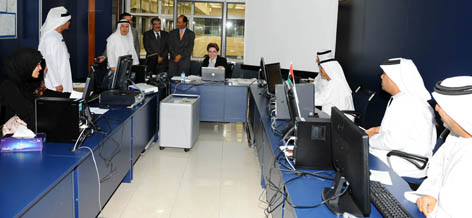
WAM workshop opening in Abu Dhabi with U.S. Ambassador Michael Corbin

The second week grouped journalists from the other emirates of Dubai, Sharjah, Ras Al Khaimah, Al Ain, Ajman, Fujairah and Um Al Qaiwain.

The U.S. Embassy in the UAE and the Emirates’ National Media Council (NMC) organized the workshops which were opened in Abu Dhabi by Ambassador Michael Corbin and NMC Director General Ibrahim Al Abed.

Tunisian Media Aren’t Quite Free Yet

“It all seemed so promising.

Tunisia rid itself of the shackles that had choked it for 23 years under the oppressive rule of Zine El Abdine Ben Ali and the media started breathing easier when journalists, bloggers and activists of all stripes made up for lost time with a vengeance.

But since that unforgettable December 2010 when Mohammad Bouazizi set himself ablaze to protest being roughed up by a policewoman and died of his burns, it’s been a bumpy ride for Tunisian media and there was still no light at the end of the tunnel at press-time.”

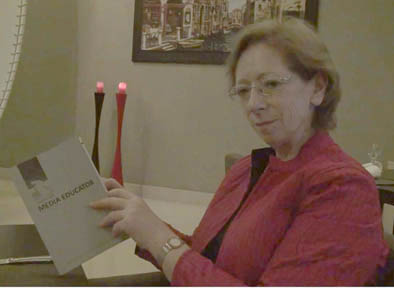
The rest of this article by Magda Abu-Fadil is available in the scholarly journal Middle East Media Educator (MEME) edited by Dr. Alma Alma Kadragic, Director, New Programs in Humanities and Social Sciences, University of Wollongong in Dubai, UAE.

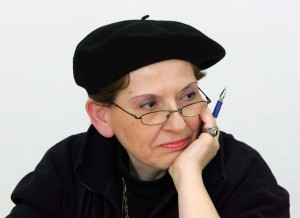
Dr. Alma Kadragic, MEME's editor

The journal “aims to bridge the gap between media educators and practitioners.”

MEME, which is eclectic in its editorial policy, is the first such journal in the Middle East, and strives to encourage dialogue between industry and academe in a region where informed analysis of the media is not widespread.

Downloadable PDFs of the journal are available on this Media Unlimited page.

Media Unlimited Trains Gulf Journalists on Crises/Conflicts Coverage

Crises and conflicts – a topic all journalists should learn to cover since they inevitably encounter them in their work at some point.

Media Unlimited conducted a five-day workshop grouping reporters and editors from Kuwait and Oman on how to write about prickly issues such as sectarian strife; economic, political and social crises; and, unexpected events.

Participants from the Kuwait News Agency (KUNA) and Oman News Agency (ONA) learned from case studies, viewed videos of unfolding crises, and wrote news and features on related topics.

KUNA business reporter Suleiman Rida writes on Kuwaiti finance minister’s resignation

They also acquired skills on the importance of integrating social media in their stories and using them as sources of information.

KUNA journalists watch video on covering demonstrations

Other topics included the need for online research, reliance on archives, establishing an extensive network of good sources and learning how to deal with them in a crisis.

ONA’s Taleb Al Riyami and Abdallah Alhajri tackle the link between poor education and unemployment in the Gulf

Equally important was focusing on how to operate in a hostile environment, accidents and shocks that adversely affect journalists, and coverage of traumatized victims of conflicts.

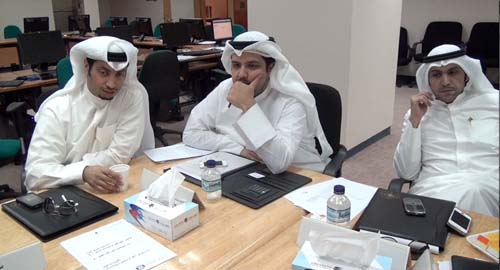
Media Unlimited director Magda Abu-Fadil flanked by trainees in Kuwait

The participants also learned about proper coordination between editors and field reporters, newsroom dynamics, ethics while on crisis assignments, and how best to write and edit content for different multimedia platforms.

The workshop May 26-31, 2012 was held at the headquarters of the Kuwait News Agency.

MU Speaks Out on Need for Better Journalism Teaching/Training at Dubai’s 11th Arab Media Forum

Media Unlimited director Magda Abu-Fadil told participants at an Arab Media Forum (AMF) 2012 workshop that academics must get up to speed and not deride the importance of social media.

Some panelists and members of the audience said online media users could not be described as journalists since they don’t have the requisite academic and professional qualifications.

Magda Abu-Fadil (second from right) during AMF2012 workshop on instinctive online journalists (Courtesy of DPC)

But, Abu-Fadil argued, many Arab journalism schools lacked resources and because of their poor curricula were turning out functional illiterates by not providing students with the knowledge base and skills for today’s exploding media market.

Additionally, faculty members were often below par and incapable of keeping up with the times, hence their aversion to digital advances, social media, and inability to incorporate them in their programs.

Media Unlimited featured at Arab Media Forum 2012 in Dubai (Courtesy of DPC)

The workshop — which preceded the two-day event’s official opening — focused on whether social and online media users had become journalists by instinct.

Talk show host Zeina Yazigi (Twitter @zyazigi) of Dubai TV interviewed Abu-Fadil on her show “Al Shari’ Al Arabi” (The Arab Street) to discuss the impact of online and social media on Arabs in the wake of revolutions gripping the region and whether citizen journalists posed serious competition to traditional media.

Read details of the 11th Arab Media Forum organized by the Dubai Press Club May 8-9, 2012.


Magda Abu-Fadil: Tunisia’s Social Media, Slip in Freedom on Al Hurra TV

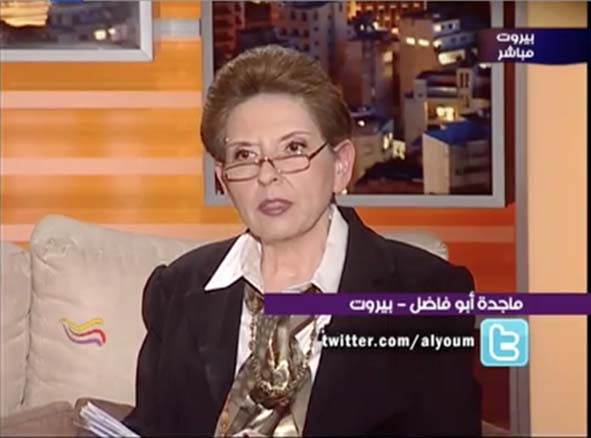
Tunisian activists fear post-revolution gains may be slipping due to pressures and threats from hardline Islamists and supporters of the ruling Annahda Party, Media Unlimited director Magda Abu-Fadil told Washington-based Al Hurra TV in an interview from Beirut.

Abu-Fadil had referred to activists like Slim Amamou in a Huffington Post piece and reiterated his and others’ concerns about restrictive controls on traditional and online media.

Magda Abu-Fadil interviewed by Al Hurra TV

Asked how Annahda could fight social media when the party was using such tools to disseminate its message, Abu-Fadil replied: “Attacks or piracy are often used by regimes to counter adversaries.”

She added that oppressive governments often resorted to various measures to promote their ideas and attack opponents such as bloggers, activists and journalists who seek a wider margin of freedom in their countries.

“Social media are a necessity for all,” Abu-Fadil said on B-Link, a segment of the Al Hurra show “Al Youm.”

MU on Aljazeera’s Listening Post – “Tunisia’s Multiplying Media”

UNESCO and various organizations marked World Press Freedom Day (May 3) 2012 in Tunisia, where the “Arab Spring” began and has led to uprisings in other Middle Eastern/North African countries.

Media Unlimited director Magda Abu-Fadil appeared in a segment of the Aljazeera English program Listening Post entitled “Tunisia’s multiplying media” to discuss journalists’, bloggers’ and activists’ fears that post-revolution media freedom is endangered by the tug-of-war between liberal secularists on the one hand, and the ruling Annahda Party and Islamist/Salafist hardliners on the other.

Magda Abu-Fadil on Aljazeera's Listening Post

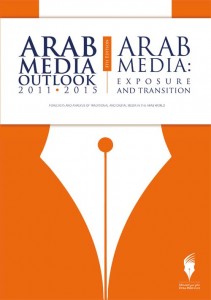
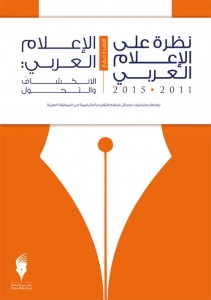
MU Contributes to Arab Media Outlook 2011-2015

Media Unlimited contributed to the 4th edition of the Arab Media Outlook 2011-2015 report published by the Dubai Press Club. The 252-page English version and 125-page Arabic edition shed light on developments in the Middle East/North Africa region by providing forecasts and analysis of traditional and Arab media. Both books can be downloaded as PDFs by filling out online forms at http://www.arabmediaforum.ae/ar/amo.aspx and http://www.arabmediaforum.ae/en/amo.aspx.

Arab Media Outlook 2011-2015

Arab Media Outlook Arabic Edition


MU Hones SAT-7 Staffers’ Journalistic Skills

Media Unlimited (MU) conducted a workshop for staffers of the TV channel SAT-7  to hone their skills in public affairs programming and basic journalistic techniques.

MU director Magda Abu-Fadil and training manager Sanaa Aljack provided an intensive course April 10-11, 2012 for producers, presenters and senior staffers on unbiased coverage of social issues, the latest practices in news reporting, information sources, digging for facts, features and editing.
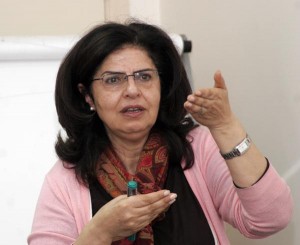
MU Training Manager Sanaa Aljack discusses public affairs TV programs

Day one training included exercises on planning the workflow while maintaining high standards of accuracy and objectivity.

Participants also learned how to turn news into televised and visual narratives and how to become more familiar with one’s audiences and their needs.

On day two participants learned about search engines, how social media are integrated into the news gathering operation for use in live coverage, and how to gauge their impact on viewers.
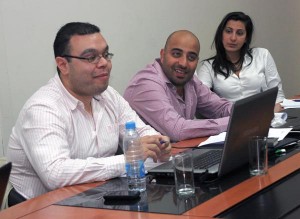
SAT-7 producers/presenters absorbed in acquiring journalistic skills

Trainers Abu-Fadil and Aljack also briefed participants on developing good and creative ideas for public affairs shows, the importance of appropriate locations to shoot footage, writing basic scripts and organizing shots, logistical details, the quality of audio output, and talking to the camera.

SAT-7 staffers also worked on writing public affairs content, analyzed and selected data for programs, and engaged in a lively discussion following a final session on media ethics.
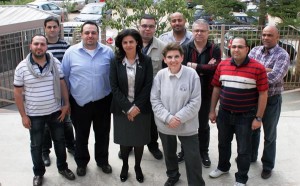
Media Unlimited and SAT-7 team up for TV training

SAT-7 in Lebanon is a Christian satellite channel by and for the people of the Middle East/North Africa region. Its programs are broadcast primarily in Arabic, but it also airs shows in Turkish and Farsi.

“إعلام بلا حدود” يدرب إعلاميين في محطة SAT-7 التلفزيونية

نظم برنامج “إعلام بلا حدود” دورة تدريبية  لمجموعة من الإعلاميين في محطة SAT-7 التلفزيونية يومي ١٠ و١١ نيسان/ابريل ٢٠١١.

في اليوم الاول تناولت محاور الدورة كيفية تعزيز مهارات المشاركين لتغطية المواضيع الإجتماعية في العالم العربي من دون الوقوع في الإستنسابية والتحيز. كما تم تعريفهم الى أحدث التقنيات في إعداد التقرير الإخباري، والبحث عن  المصادر والمعلومات، وأهمية إلمام الإعلامي بمادته وقدرته على إجراء التحقيق والمقابلة والتحرير وما الى ذلك.

وتضمنت الدورة تمارين تطبيقية تتعلق بتنظيم  العمل وإعداد خطة واضحة للخطوات المفترض القيام بها وتدوين التفاصيل والإلتزام بالدقة والموضوعية.

كما تم تدريب المشاركين على كيفية تحويل الأخبار والأحداث الى قصص إخبارية بمواصفات تمنحها خصوصيتها، إضافة الى الإلمام ببيئة المتلقي وخلفياته الثقافية ليتمكن الإعلامي من التواصل مع جمهوره.

في اليوم الثاني تركز التدريب على علاقة الإعلامي بمحركات البحث ووسائل التواصل الإجتماعي ودور هذه الوسائل في المساهمة بصناعة المحتوى التلفزيوني والتغطية المباشرة.

وأجرى المشاركون تمارين تطبيقية عن كيفية التواصل مع شرائح المجتمع من خلال وسائل الإعلام الحديثة ما يساعدهم على الترويج لأعمالهم، وعلى التعرف الى صدى هذه الأعمال لدى المشاهدين.

كما نوقشت آليات العثور على الافكار الجيدة والجديدة، مع الإشارة الى إمكانية تأمين المادة البصرية للفكرة، وأهمية تحديد المواقع المقترحة للتصوير، وكتابة نص مبدئي للمساعدة على تصور ترتيب اللقطات، وإختيار التجهيزات، وقاعدة التعاقب أو تسلسل اللقطات، وتسجيل الصوت، والحديث الى الكاميرا.

وأفردت الدورة محوراً خاصاً بكتابة النص والمونتاج، ومراجعة ما تم بتصويره، وأهمية الوثائق في إعداد المادة التلفزيونية، والقدرة على قراءة تقارير وإستطلاعات رأي، ودراسة وإستخلاص ما يفيد التقرير التلفزيوني منها وتقديمه على الشاشة بطريقة يسهل على المشاهد متابعتها وفهمها.

وأختتمت الدورة بعرض لأخلاقيات العمل الإعلامي.

يجدر الإشارة بأن القناة في لبنان هي محطة مسيحية تبث البرامج على نطاق الشرق الأوسط وشمال أفريقيا باللغة العربية في المقام الأول، إضافة الى التركية والفارسية

الصور: سناء الجاك مديرة التدريب في “إعلام بلا حدود” تتحدث عن كيفية تحضير برامج إخبارية، جانب من إعلاميي  محطة SAT-7، الإعلاميون المشاركون في الدورة مع ماجدة أبوفاضل وسناء الجاك.