MU Director on Cover of UAE Media Mag

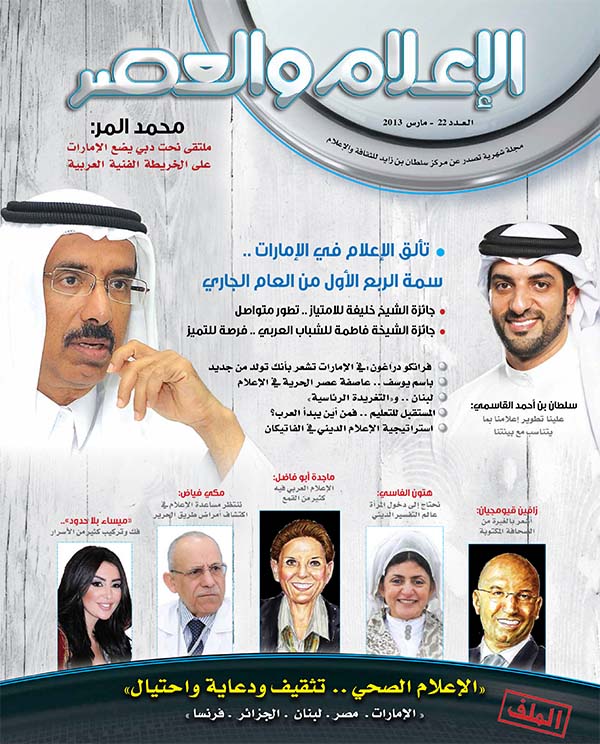
Media Unlimited director Magda Abu-Fadil made it on the cover of “Al I3lam wal 3sr” (Media and Era), a United Arab Emirates monthly magazine focused on media issues.

Cover of Al I3lam wal 3sr includes MU director

Cover of Al I3lam wal 3sr includes MU director

The wide-ranging interview in the magazine’s March issue shed light on Abu-Fadil’s career in print, broadcast and online media, as well as her stint in academia and her take on media ethics, social networks, and how to re-purpose oneself as a journalist.

A PDF of the Al I3lam wal 3sr article can be downloaded here.

Accuracy key to good journalism: Abu-Fadil

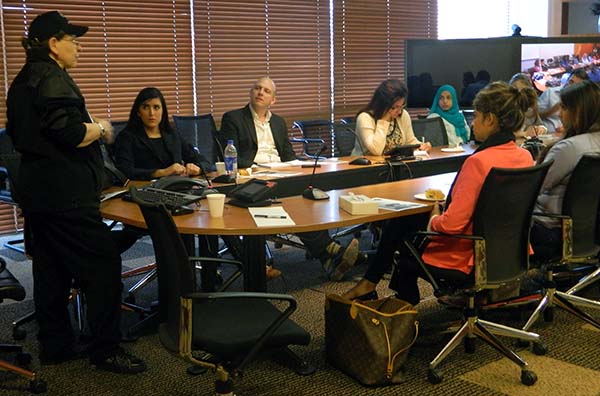
Getting it right topped the list of tips Media Unlimited director Magda Abu-Fadil offered journalists at Al Arabiya’s English website during an informal chat in Dubai.

Magda Abu-Fadil addresses Al Arabiya’s English website team

Magda Abu-Fadil addresses Al Arabiya’s English website team

Abu-Fadil said elementary rules like spelling people’s names correctly and ensuring their titles were precise should not be overlooked since they were the corner stones of good reporting.

She also cautioned participants, several of whom she trained in October 2012, not to rush and publish information before verifying it from multiple sources, noting that rumors and other questionable news and visuals filled the Internet, leading to many a journalist’s downfall.

Abu-Fadil recounted some of her adventures as a foreign correspondent and editor and how she had transitioned from being a traditional journalist to a blogger and media trainer.

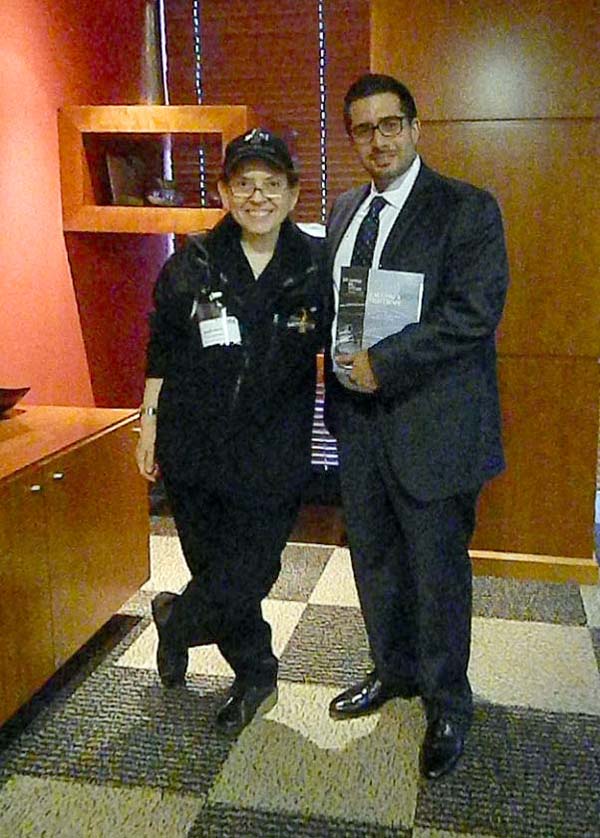
Abu-Fadil with Al Arabiya English website editor in chief Faisal Abbas

Abu-Fadil with Al Arabiya English website editor in chief Faisal Abbas

The event dubbed “Accuracy: How it could make us, or break us,” was part of an Al Arabiya English website General Assembly in March 2013.

UAE Foreign Aid Organizations Participate in Strat Comm Course

Some 20 participants from United Arab Emirates-funded foreign aid organizations learned how to fine-tune their communications strategies by ensuring better interaction with field workers and disseminating their news through the media.

The participants took part in a workshop on Strategic Communications conducted by Media Unlimited director Magda Abu-Fadil under the patronage of Sheikha Lubna bint Khaled Al Qassemi to help them craft their internal and external messages.

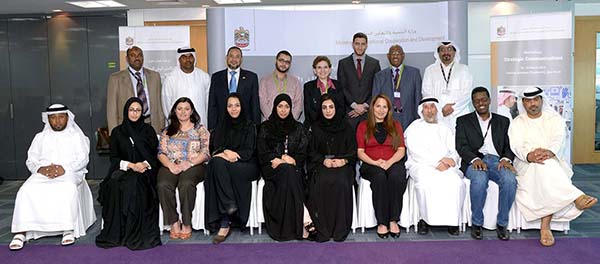
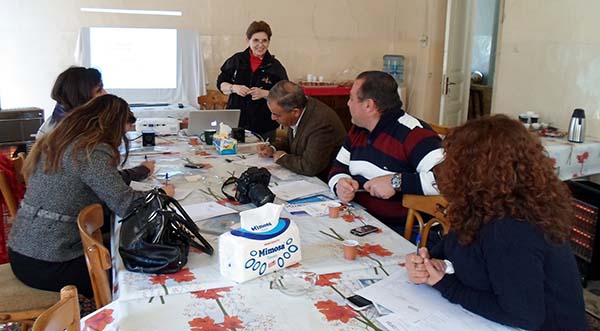
Magda Abu-Fadil (center back row) trains UAE-based foreign aid communications  officials

Magda Abu-Fadil (center back row) trains UAE-based foreign aid communications officials

The March 2013 training in Abu Dhabi centered on building bridges with the media, setting priorities, appreciating deadlines for various media, collecting news from the field, ethics in public relations, planted stories and conflict of interest, and, their organization’s visual identity.

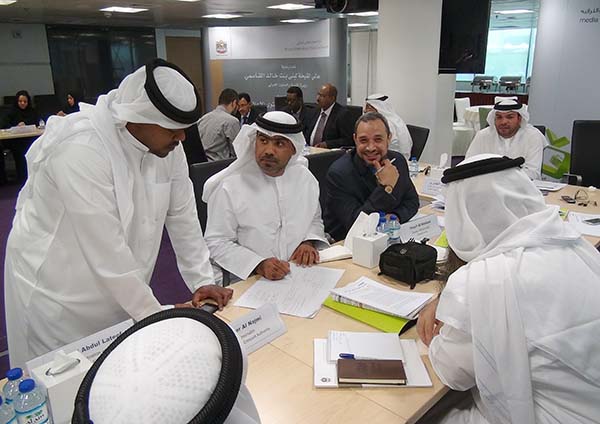
Participants worked in groups to map out strategic media plans, practiced writing op-eds, and discussed how to improve coordination between their respective organizations.

Working groups map out strategic communications plans

Working groups map out strategic communications plans

They were advised to think like journalists, and to beef up their online presence through traditional and social media channels.

The workshop was organized by the UAE Ministry of International Cooperation and Development, the Office for the Coordination of Foreign Aid, and twofour54 Tadreeb.

That’s Entertainment! Training Journalists Covering the Industry

How can one train journalists in coverage of the entertainment industry?

It’s not just television, radio, the movies and awards shows, but also the performing arts, the lucrative gaming business, health matters, and sometimes sports issues that define entertainment.

Producing entertainment content at MBC's online Dubai newsroom

Producing entertainment content at MBC’s online Dubai newsroom

Add “infotainment” and “edutainment,” and one has a vast world of news, views, statistics, and countless forms of visual representation to produce and deliver to any number of recipients across multiple mobile platforms.

So juggling news gathering, curation, production and packaging into the right online channels and interacting with one’s audiences via social media to keep the dynamic conversation going requires special talents, skills and a wide base of general knowledge.

Enter Media Unlimited’s Magda Abu-Fadil who worked with a team of very capable and professional entertainment journalists at the MBC Group’s online newsroom in Dubai to sharpen their skills and tweak their copy.

MBC-Al Arabiya building in Dubai

MBC-Al Arabiya building in Dubai

The March 2013 workshop focused on identifying entertainment journalism, tools of the trade, story structure, the art of writing entertainment news, breaking news and features.

The brief course dealt with widening the information base, working with archives, using background data and integrating strong visual elements in all stories.

Not to be overlooked was a dose of media ethics, notably in a field rife with rumors and innuendo.

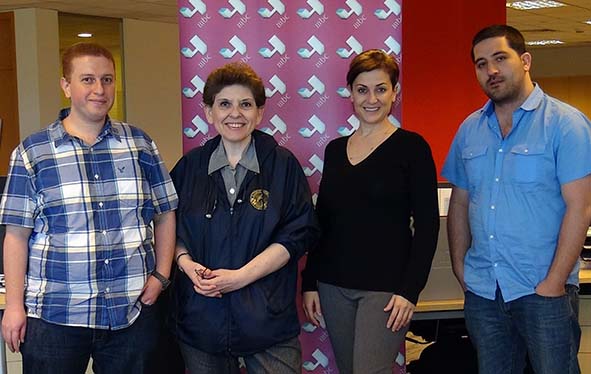
Magda Abu-Fadil with new MBC friends

Magda Abu-Fadil with new MBC friends

The team also learned about interviewing techniques when dealing with celebrities, speeches, news conferences and the use of social media to collect and promote entertainment news.

MU Trains Lebanese Journos to Cover Women’s Economic Empowerment

A series of countrywide workshops introduced Lebanese journalists to women’s economic empowerment in rural areas in a bid to improve media coverage of the often-neglected topic.

Magda Abu-Fadil with Tripoli journalists

Magda Abu-Fadil with Tripoli journalists

Print, online and broadcast journalists based in various regions of Lebanon learned how to define women’s economic empowerment, how to enter the terminology in their media lexicon and how to cover topics related to promoting gender equality.

Abu-Fadil with Bekaa-based journalists

Abu-Fadil with Bekaa-based journalists

MU director Magda Abu-Fadil conducted a series of mini-courses in the Bekaa Valley city of Zahle, the northern port city of Tripoli and the southern city of Tyre where reporters, correspondents, cameramen and photographers became better acquainted with agriculture-based cooperatives that help women become financially independent.

The sessions included knowledge about existing impediments to empowerment.

Abu-Fadil also discussed how advocacy through traditional and social media can enhance women’s economic empowerment, and reviewed case studies of successful initiatives.

The three two-day workshops in February and March organized by the Collective for Research and Training on Development – Action (CRTDA) brought together reporters and civil society representatives from various towns and cities in Lebanon.

They followed an initial course aimed at journalists in the Lebanese capital Beirut.

Abu-Fadil and CRTDA’s Hayat Mershad with Beirut journalists

Abu-Fadil and CRTDA’s Hayat Mershad with Beirut journalists

A session focused on women in the Lebanese economy, how gender equality translates into smart economics, and, how the CRTDA has helped rural women set up cooperatives and their economic impact.

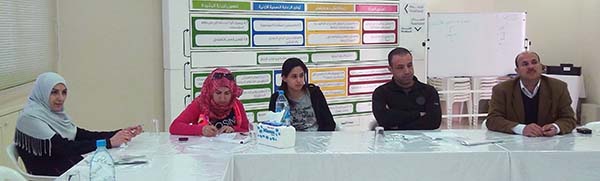
Trainees in Tyre

Trainees in Tyre

Trainees were given examples of cooperatives in the country’s Bekaa, South and Akkar regions aimed at building women’s productive and leadership skills, facilitating their access to local and international markets and supporting participatory governance and leadership.

A session by journalist Saada Allaw featured results of a media audit on coverage of women’s economic empowerment and gender equality issues.

Saada Allaw shares media study results with Tyre journalists

Saada Allaw shares media study results with Tyre journalists

Participants were then tasked with writing a piece for publication in their respective media, which will be reviewed and edited on a third training day weeks after the initial workshop.

The best coverage from workshops across the country will be awarded and will be published on CRTDA’s website.


Journalists Learn to Communicate Women’s Economic Empowerment

Print and online journalists attending the first in a series of Lebanon-wide workshops on women’s economic empowerment learned about gender mainstreaming in the media, promoting equality, and reviewed case studies of successful initiatives.

Beirut-based reporters and civil society representatives attended a two-day course organized by the Collective for Research and Training on Development – Action (CRTDA)  that tackled issues of women in the Lebanese economy, how gender equality translates into smart economics, and, rural women’s cooperatives and their economic impact.

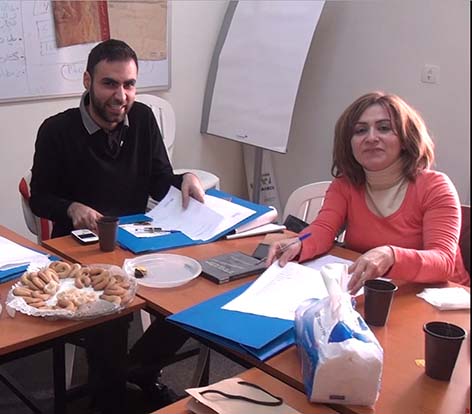
Trainees at CRTDA's Beirut Workshop

Trainees at CRTDA’s Beirut Workshop

The CRTDA helped set up 36 rural cooperatives in the country’s Bekaa, South and Akkar regions aimed at building women’s productive and leadership skills, facilitating their access to local and international markets and supporting participatory governance and leadership.

Media Unlimited director Magda Abu-Fadil mentored trainees on media challenges to reduce gender gaps, gender-sensitive indicators, and how to use gender-neutral language in their reporting.

A session dedicated to ethics walked them through the dos and don’ts of gender-based coverage and how to avoid reporting pitfalls.

Magda Abu-Fadil Explains Women's Economic Empowerment

Magda Abu-Fadil Explains Women’s Economic Empowerment

A final session by journalist Saada Allaw featured results of a media audit on coverage of women’s economic empowerment and gender equality issues.

Participants were then tasked with writing a piece for publication in their respective media, which will be reviewed and edited on a third training day weeks after the initial training.

The best coverage from workshops across the country will be awarded and will be published on CRTDA’s website.

The Middle East in Transition: What Future for Arab Youth?

Arab Youth are more concerned about fair pay, home ownership and a decent life than democracy, Media Unlimited director Magda Abu-Fadil told students at Sciences Po – Menton in the south of France.

The rising cost of living was a major concern although the lack of democracy and civil unrest were also seen as obstacles to progress, she said quoting the ASDA’A Burson-Marsteller Arab Youth Survey 2012 that analyzed data from 12 countries.

The study also revealed that while a majority of young people agreed traditional values were paramount, an increasing number of them said such values were outdated and should be replaced.

Magda Abu-Fadil on Arab youth prospects with Sciences Po-Menton director Bernard El-Ghoul and students

Creating jobs for a growing Arab youth population is a major challenge for decision makers following the outbreak of revolutions in a number of the region’s countries.

Demographic issues such as high population growth and pressures on labor markets compound the problem, Abu-Fadil said.

She also discussed young people’s contribution to revolutions gripping the Arab world and what prompted them to take to the streets.

The role social media played in the various uprisings was another topic of discussion, with Abu-Fadil explaining that such tools were not the ultimate influencers in these movements given the high rate of illiteracy and uneven access to the Internet.

Although prospects may appear dim, education reform could be an answer, with emphasis on critical thinking and the revisiting of school and university curricula to meet employers’ requirements.

The discussion in January 2013 was part of a week-long orientation program at the Middle East/Mediterranean campus of Sciences Po aimed at familiarizing students with the university’s undergraduate and graduate studies, life in the Middle East, and exchange programs available to them.


Abu-Fadil Dissects Media Accountability in Lebanon

How much media accountability is there in Lebanon? Are media accountable and do they hold officials accountable?

It’s a double-edged sword that cuts both ways, said Media Unlimited Director Magda Abu-Fadil, adding that laws and codes of ethics are not implemented, loosely implemented, or totally ignored, depending on the issue at stake, politics involved, and persons influencing them.
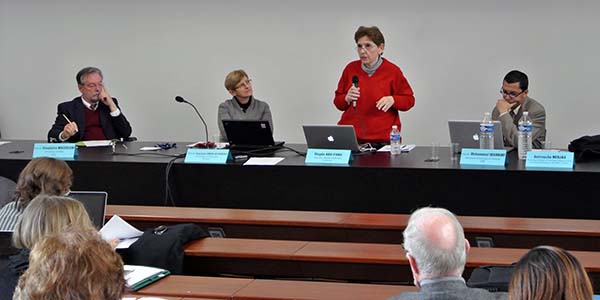
Magda Abu-Fadil on media accountability in Lebanon

She dissected Lebanon’s antiquated print and broadcast media laws that require major overhaul.

In a presentation on accountability at a forum organized by Media Act in Toulouse, France, Abu-Fadil pointed to Lebanese legislator Ghassan Moukheiber’s Media Reform Bill aimed at shrinking the existing 109 provisions of the 1962 print law to 75.

According to Moukheiber, almost 80% of his draft bill’s provisions have been approved in the parliamentary committee discussing the matter.

Another draft bill on broadcast media put forward by Moukheiber would see the strengthening of the National Audio-Visual Media Council as a regulatory body.
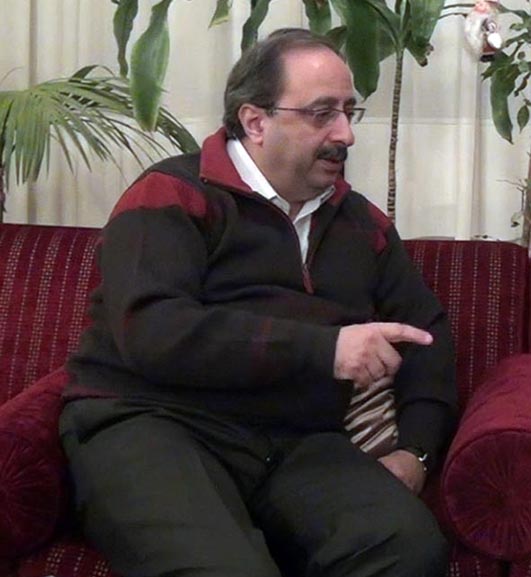
Lebanese legislator Ghassan Moukheiber

It’s currently a toothless tiger of elected and appointed members along sectarian lines.

A very important draft bill on access to information has also passed the test, but all three bills have yet to be voted into law.

Abu-Fadil reviewed media-related events in 2012 and Lebanese print and broadcast journalists’ efforts to establish a stronger union presence.

She also discussed press freedom monitoring efforts by various local and international organizations, attempts to muzzle the media and whether Lebanon was immune to the “Arab Spring.”

The Media Act forum in January 2013 entitled “Media Accountability in Transition: Insights from the Arab World” was organized jointly by the German Erich-Brost-Institut at Dortmund University, the French Institut d’Etudes Politiques de Toulouse, and Paris II University.

Profs. Olivier Baisnée of IEP Toulouse and Judith Pies of Dortmund University

It grouped experts from Germany, France, Italy, Britain, Poland, Egypt, Algeria, Morocco and Lebanon who reviewed potentials for media accountability in Jordan and Tunisia as well prospects in Egypt and Morocco.

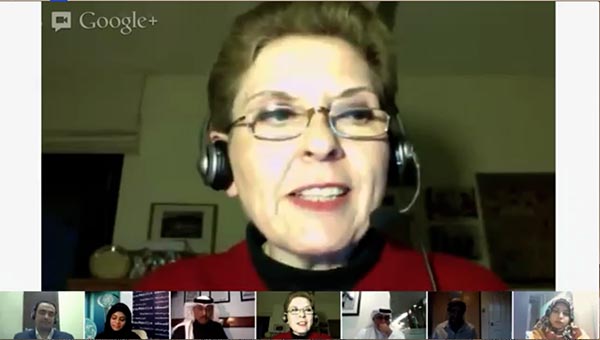
Dubai Press Club Google Hangout Reviews Arab Journalism Award

Seven journalism aficionados rounded up 2012 events with a Google Hangout session to review the Arab Journalism Award’s (AJA) development and impact.

AJA judges and recipients discussed the Arabic language as a standard for evaluating published materials, the importance of keeping up with technological advances, and the evolution of social and digital media as inseparable parts of journalism ahead of the award’s 12th run in May 2013.

The virtual meeting dubbed “Journey to Honor Creativity” was chaired December 30 by the AJA’s manager Muna Busamra to feature the award’s growing importance in the Arab world and its effect on the region’s journalists.

Arab Journalism Award manager Muna Busamra

Participants included Saudi media researcher Fahed Al Harithi, Saudi journalist Nahed Bashatah (one of the first women to be honored), Egyptian journalist/recipient Ali Zalat, Egyptian journalist/recipient Walaa Nabil, Emirati journalist/recipient Mohammad Aljoker, and Media Unlimited director Magda Abu-Fadil.

Abu-Fadil, a former board member and panel judge of the AJA, was instrumental in introducing investigative and online journalism categories to the award.

MU director reviews AJA merits

She also stressed the importance of regular training for journalists to ensure their skills remain up to par in a fast-changing media landscape.

The Arab Journalism Award is administered by the Dubai Press Club under the patronage of Sheikh Mohammad Bin Rashed Al Maktoum. Prizes are traditionally awarded at the end of the annual Arab Media Forum in Dubai.


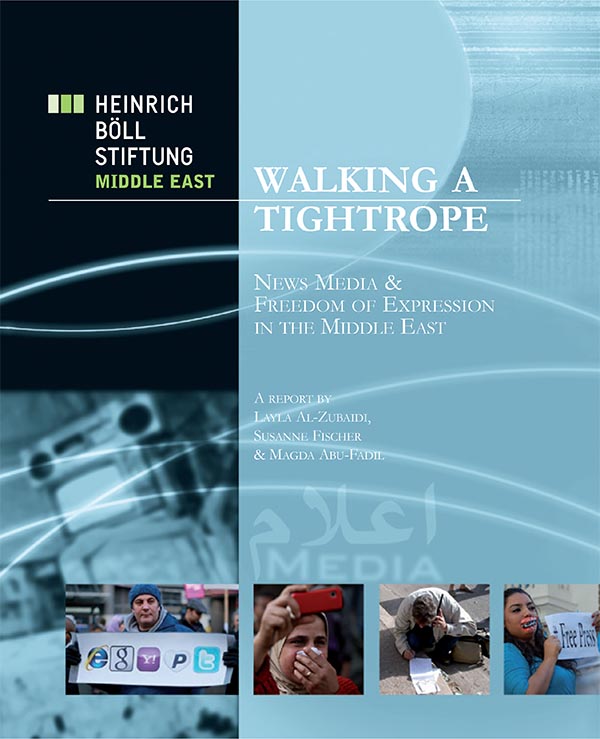
Walking A Tightrope: News Media & Freedom of Expression in the Middle East

Walking A Tightrope: News Media & Freedom of Expression in the Middle East by Layla Al-Zubaidi, Susanne Fischer and Magda Abu-Fadil is a good reference on the state of affairs in the MENA region with a focus on six Arab countries.

Over the past 15 years, the Arab World1 has witnessed the rapid development of its news media, raising standards of reporting as well as expectations. Satellite news channels have successfully breached national boundaries and have stirred public debate, challenged censorship and prompted critical reflection. Audiences across the region and in the diaspora have been actively participating in talk shows, and female anchors and hosts provide new role models for women in the region.

These channels have also managed to reverse the traditional flow of news from Western media to the region. In 1990, Arab viewers turned to CNN for live coverage, when Iraq invaded Kuwait and coalition forces led by the USrolled back the invasion. When a US-led coalition invaded Iraq in 2003, it was Western media that sought coverage from their Arab counterparts.

With the outbreak of what has become known as the “Arab Spring,” the media landscape is again in a heightened state of flux, as new questions arise: Have Facebook, Twitter and YouTube taken over, or do satellite television channels still enjoy the lion’s share of audiences? Are accurate figures on who is influencing whom attainable, at a time when traditional media are struggling to remain financially afloat – in the Arab World and beyond?

What about citizen journalists armed with mobile phones, small digital devices, Internet connections and other means of communication, who are competing to disseminate their messages of anger, hope, fear, defiance, demands for freedom and a better life, while their leaders cling to power and insist on squashing all forms of dissent?

The authors attempt to answer this and other questions in the study that can be downloaded from the Heinrich Böll Foundation’s website.